
📌 Introduction
Have you ever heard terms like A1, A2, B1, B2, C1, C2 and wondered what they mean?
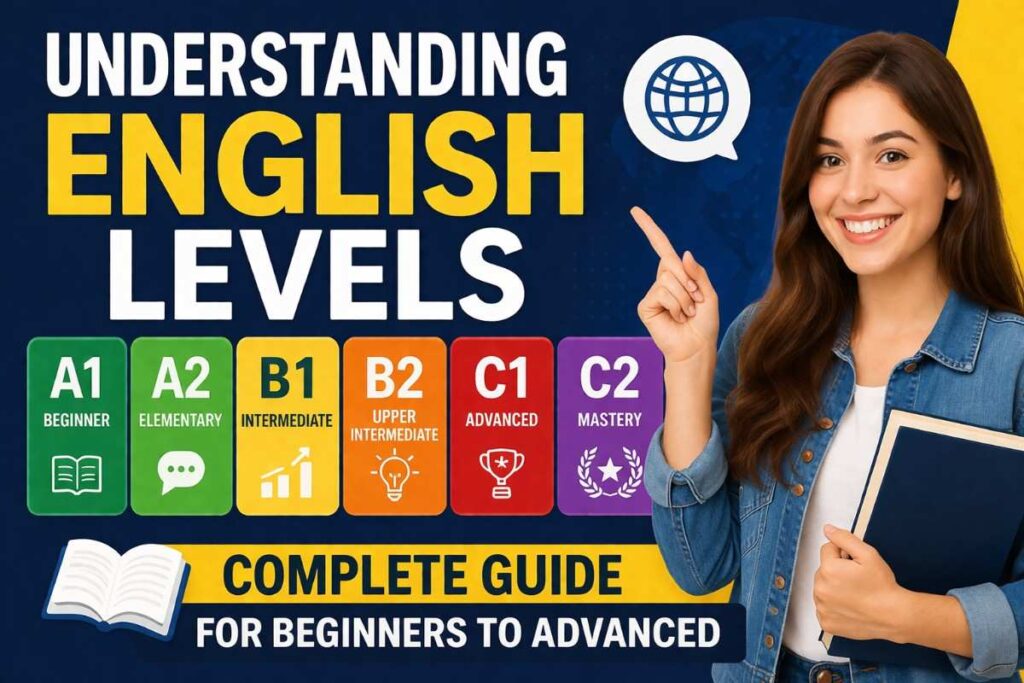
These are international English proficiency levels defined by the Common European Framework of Reference for Languages (CEFR). This system helps measure how well someone can understand, speak, read, and write English.
👉 In simple words:
CEFR = A scale that tells your English level from beginner to expert
🧠 What Are the 6 Levels of English?
English is divided into 6 levels:
| Level | Name | Meaning |
|---|---|---|
| A1 | Beginner | Very basic English |
| A2 | Elementary | Simple communication |
| B1 | Intermediate | Daily conversation |
| B2 | Upper-Intermediate | Fluent but not perfect |
| C1 | Advanced | Strong command |
| C2 | Proficient | Near-native level |
🔰 A1 Level (Beginner)
✅ What You Can Do:
- Understand basic words (hello, name, food)
- Introduce yourself
- Ask simple questions
❌ Limitations:
- Cannot speak long sentences
- Limited vocabulary
🗣 Example:
👉 “My name is Anshu. I am a teacher.”
📈 How to Improve:
- Learn basic vocabulary daily
- Practice simple sentences
- Use apps like Duolingo
🔰 A2 Level (Elementary)
✅ What You Can Do:
- Talk about daily routine
- Understand slow speech
- Write simple sentences
🗣 Example:
👉 “I go to school every day. I like tea.”
📈 How to Improve:
- Learn basic grammar (tenses)
- Practice daily conversations
- Watch simple English videos
🔰 B1 Level (Intermediate)
✅ What You Can Do:
- Talk about experiences and opinions
- Understand normal conversations
- Write paragraphs
🗣 Example:
👉 “I think education is very important because it helps us grow.”
📈 How to Improve:
- Start speaking daily
- Read newspapers
- Practice writing essays
🔰 B2 Level (Upper-Intermediate)
✅ What You Can Do:
- Speak fluently with fewer mistakes
- Understand movies and news
- Express ideas clearly
🗣 Example:
👉 “In my opinion, technology has both advantages and disadvantages.”
📈 How to Improve:
- Watch English movies without subtitles
- Join speaking groups
- Learn advanced vocabulary
🔰 C1 Level (Advanced)
✅ What You Can Do:
- Speak confidently in professional settings
- Understand complex topics
- Write formal content
🗣 Example:
👉 “This issue requires a more nuanced understanding of social dynamics.”
📈 How to Improve:
- Practice public speaking
- Read advanced books
- Write blogs/articles
🔰 C2 Level (Proficient)
✅ What You Can Do:
- Speak like a native
- Understand everything easily
- Use idioms and expressions naturally
🗣 Example:
👉 “He nailed it without breaking a sweat.”
📈 How to Improve:
- Focus on nuance, tone, and style
- Learn idioms, phrasal verbs
- Engage in deep discussions
🧪 How to Know Your English Level?
1. Take Online Tests
You can use:
- Duolingo test
- British Council test
2. Self-Check Questions:
Ask yourself:
- Can I introduce myself? (A1)
- Can I talk daily routine? (A2)
- Can I express opinions? (B1)
- Can I speak fluently? (B2)
- Can I debate topics? (C1)
- Can I speak like native? (C2)
🚀 How to Improve Your English Level (Step-by-Step)
🪜 Step 1: Build Foundation
- Vocabulary + basic grammar
🪜 Step 2: Start Speaking
- Daily speaking practice (even alone)
🪜 Step 3: Input + Output Rule
- Input = Listening + Reading
- Output = Speaking + Writing
🪜 Step 4: Use Real-Life Practice
- Talk to friends
- Teach others (best method for you 👨🏫)
🪜 Step 5: Follow Smart Resources
- YouTube learning
- Apps like Duolingo
- Structured courses like Wordify (recommended by you 👍)
⚠️ Common Mistakes Students Make
❌ Only studying grammar
❌ Not speaking daily
❌ Fear of making mistakes
❌ Translating from Hindi every time
👉 Solution:
Think in English + Practice daily
🎯 Final Conclusion
Understanding English levels (A1 to C2) helps you:
- Track your progress
- Set clear goals
- Improve step by step
👉 Remember:
English is a skill, not a subject.