

Students often struggle with time management, exam stress, and unfinished homework. One day they study for hours, and the next day they procrastinate. This lack of consistency leads to poor academic performance and frustration.
The solution is simple: a study planner for students.
A well-designed study planner helps students organize their schedule, track assignments, set goals, and build a productive study routine. Instead of feeling overwhelmed, students gain clarity and control over their academic life.
In this complete guide, you will learn how to use a study planner for students effectively, how to design one, and how it can dramatically improve academic performance.
What Is a Study Planner for Students?
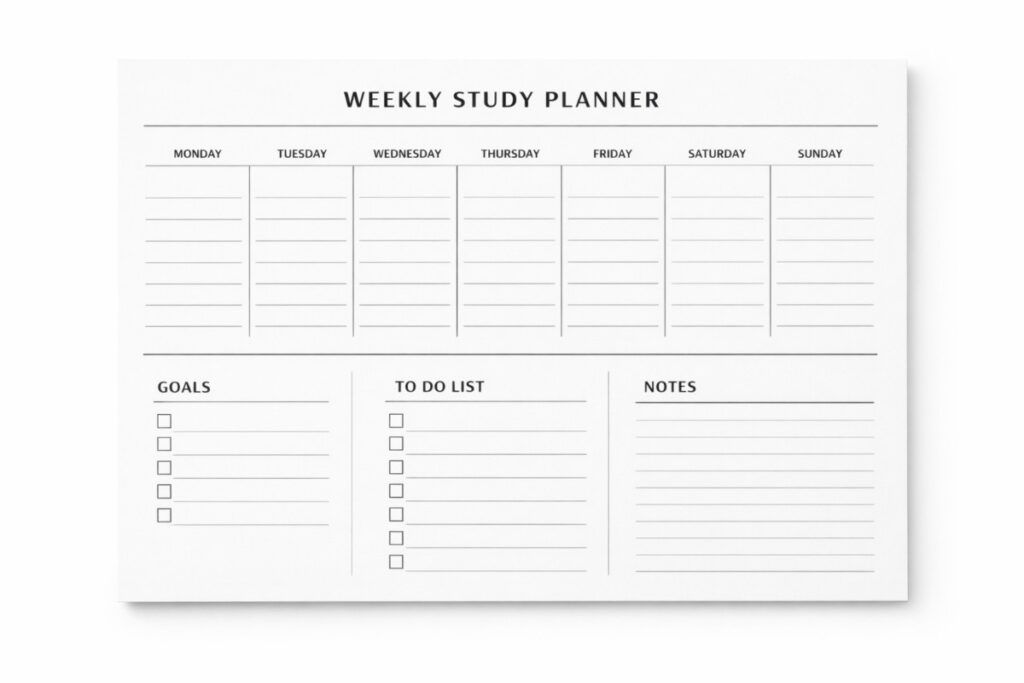
A study planner for students is a tool used to organize academic tasks such as:
- Homework
- Assignments
- Revision sessions
- Exam preparation
- Class schedules
- Study goals
Instead of randomly deciding what to study, students follow a clear structured plan.
A study planner can be:
- A notebook
- A printed template
- A digital planner
- A mobile app
The goal is simple: plan your study time before the day begins.
Why Every Student Needs a Study Planner
Many students believe studying longer hours leads to success. In reality, planning matters more than hours.
A study planner for students provides several powerful benefits.
1. Better Time Management
Students can allocate specific time slots for subjects. This prevents wasting time deciding what to study.
2. Reduced Stress
When tasks are written down, the brain relaxes. Students feel more in control of their workload.
3. Improved Academic Performance
Planning allows students to revise regularly instead of cramming before exams.
4. Increased Motivation
Checking completed tasks gives a sense of achievement.
5. Balanced Lifestyle
A good study planner for students includes time for rest, hobbies, and exercise.
How to Create a Study Planner for Students
Creating a study planner does not require complicated tools. Follow these simple steps.
Step 1: List All Subjects
Start by writing down every subject you study.
Example:
- Mathematics
- Science
- English
- Social Studies
- Computer Science
This helps you distribute time evenly.
Step 2: Identify Difficult Subjects
Some subjects require more practice.
For example:
- Mathematics may need daily practice.
- Science may need revision and diagrams.
Your study planner for students should allocate more time to difficult subjects.
Step 3: Break Study Sessions into Small Blocks
Long study sessions reduce concentration.
Instead of studying 4 hours continuously:
Study like this:
- 45 minutes study
- 10 minute break
This technique is called the Pomodoro method.
You can learn more about it from the Pomodoro Technique research on productivity.
Step 4: Schedule Weekly Study Goals
Your planner should include:
Daily tasks
Weekly goals
Monthly revision
Example weekly goals:
- Finish chapter 3 mathematics
- Revise science diagrams
- Practice English essay writing
A study planner for students works best when goals are clear.
Step 5: Add Revision Time
Most students forget revision.
Your planner should include:
- Daily revision (15 minutes)
- Weekly revision
- Pre-exam revision
Revision strengthens memory.
According to research from Harvard University, spaced repetition significantly improves learning retention.
Daily Study Planner Example
Here is a simple example.
| Time | Activity |
|---|---|
| 4:00 – 4:45 | Mathematics practice |
| 4:45 – 5:00 | Break |
| 5:00 – 5:45 | Science reading |
| 5:45 – 6:00 | Break |
| 6:00 – 6:40 | English writing |
| 6:40 – 7:00 | Revision |
This simple study planner for students structure keeps study sessions productive.
Best Tools for Creating a Study Planner
Students can use different tools depending on their preference.
Physical Study Planner
Advantages:
- No screen distraction
- Easy to customize
- Better memory retention
Digital Study Planner
Students can use apps like:
- Notion
- Google Calendar
- To Do List
- Use AI to PLAN
Digital planners allow reminders and notifications.
Common Mistakes Students Make While Planning
Even with a study planner for students, mistakes can happen.
Overloading the Schedule
Trying to study too many subjects in one day leads to burnout.
Ignoring Breaks
Breaks are essential for focus.
Not Following the Planner
Consistency is more important than perfection.
Tips to Make Your Study Planner Effective
Here are some expert tips.
Keep It Simple
Avoid complicated schedules.
Review Your Planner Daily
Spend 5 minutes each night preparing the next day.
Track Progress
Mark completed tasks with a tick.
Stay Flexible
If something unexpected happens, adjust the schedule.
A flexible study planner for students works better than a rigid one.
How Parents and Teachers Can Help Students
Parents and teachers play an important role in helping students follow their study planner.
They can:
- Encourage daily planning
- Review weekly progress
- Help prioritize difficult subjects
- Provide a quiet study environment
Teachers can also recommend helpful learning platforms such as Wordify English for additional practice.
Final Thoughts
A study planner for students is not just a timetable. It is a powerful productivity tool that builds discipline, reduces stress, and improves academic performance.
Students who consistently use a study planner develop better study habits, stronger focus, and higher confidence in their academic journey.
The key is simple:
Plan your study.
Follow the plan.
Review your progress.
Over time, this small habit can lead to big academic success.




Pingback: How Students Can Use AI: The Complete Practical Guide - Wordify English