
Introduction
Imagine a classroom where every student has a personal tutor available 24/7, lessons automatically adapt to learning speed, and teachers spend less time on repetitive tasks and more time inspiring students.
This is no longer a futuristic dream. It is the reality of Artificial Intelligence in Education.
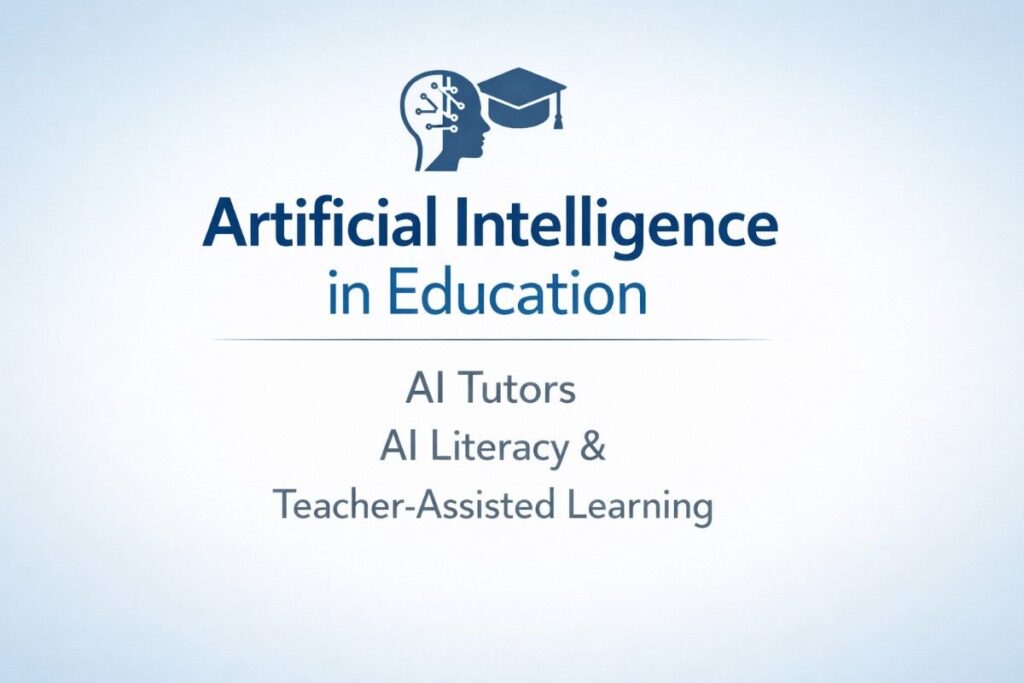
AI is transforming how students learn and how teachers teach. Instead of replacing educators, modern AI tools are becoming powerful assistants that enhance teaching, personalize learning, and make education more accessible.
From AI agents acting as personal tutors to AI literacy becoming a necessary skill, the education sector is experiencing one of its biggest technological transformations.
In this article, we will explore three major shifts happening right now:
- The rise of AI agents as personalized tutors
- The importance of AI literacy for students and educators
- How teachers can use AI for content creation, grading, and lesson planning
Let’s dive into the future of learning.
The Rise of AI Agents as Personal Tutors
For decades, education followed a one-size-fits-all approach. Every student received the same lesson, the same pace, and the same teaching method.
But students learn differently.
Some learn fast, some need repetition, and some understand concepts better through visuals or examples.
This is where AI-powered learning assistants are changing the game.
Modern AI tools can analyze:
- Student performance
- Learning speed
- Weak areas
- Learning style
Using this data, AI can customize lessons specifically for each student.
Platforms like
- Khan Academy
- Duolingo
- Coursera
already use AI to personalize learning experiences.
For example:
- If a student struggles with algebra, the AI provides extra practice questions.
- If the student improves quickly, the AI automatically increases difficulty.
- If mistakes repeat, the AI explains the concept differently.
This type of learning creates something extremely powerful:
Personalized education at scale.
Key Benefits of AI Tutors
| Benefit | Explanation |
|---|---|
| Personalized Learning | AI adapts lessons based on each student’s ability |
| 24/7 Support | Students can ask questions anytime |
| Instant Feedback | Mistakes are corrected immediately |
| Progress Tracking | AI analyzes learning patterns and improvement |
Instead of replacing teachers, AI tutors act like a teaching assistant that never gets tired.
AI Literacy for Students and Educators
As AI tools become more common, knowing how to use them properly becomes essential.
Just like computer literacy became important in the 2000s, AI literacy is becoming a critical skill today.
Students and teachers must learn:
- How AI tools work
- How to verify AI-generated information
- How to use AI ethically and responsibly
For example, tools like ChatGPT can help students understand difficult topics quickly.
But students must also learn:
- AI can sometimes produce incorrect information.
- AI should assist learning, not replace critical thinking.
Why AI Literacy Matters
Without AI literacy, students may:
- Depend blindly on AI answers
- Lose problem-solving skills
- Misuse AI for academic dishonesty
With proper AI education, students can instead learn to:
- Use AI as a research assistant
- Improve writing and communication
- Explore complex topics faster
Organizations like UNESCO have already emphasized the need for ethical AI education in schools.
Core Skills in AI Literacy
Students and teachers should learn:
- Prompt writing (how to ask AI better questions)
- Fact-checking AI responses
- Ethical AI usage
- AI-assisted research methods
- Digital responsibility
These skills will soon become as important as reading and writing.
Teacher-Assisted AI Content Creation
Teachers spend a large portion of their time on repetitive tasks such as:
- Creating worksheets
- Preparing lesson plans
- Checking assignments
- Writing quizzes
AI tools can dramatically reduce this workload.
Instead of spending hours preparing materials, teachers can use AI to generate customized teaching resources within minutes.
For example, educators can use:
- ChatGPT for lesson explanations
- Canva for presentation design
- Quizlet for quizzes and flashcards
Tasks AI Can Assist Teachers With
| Teaching Task | AI Assistance |
|---|---|
| Lesson Planning | Generate structured lesson outlines |
| Assignment Creation | Create worksheets and practice questions |
| Grading Support | Analyze answers and suggest feedback |
| Content Simplification | Explain complex topics in simple language |
| Student Feedback | Generate personalized comments |
For instance, a teacher could ask AI:
“Create a simple explanation of photosynthesis for grade 5 students with examples.”
Within seconds, AI can produce a clear explanation that the teacher can refine and customize.
This allows educators to focus more on mentoring students rather than administrative work.
Comparison: Traditional Teaching vs AI-Enhanced Learning
| Aspect | Traditional Education | AI-Enhanced Education |
|---|---|---|
| Learning Pace | Same for all students | Personalized pace |
| Feedback | Delayed feedback | Instant feedback |
| Teaching Resources | Manually created | AI-generated resources |
| Student Support | Limited class time | 24/7 AI assistance |
| Data Insights | Minimal tracking | Detailed learning analytics |
The future classroom will likely combine human teaching + AI assistance.
Key Insights: The Future of AI in Education
Several important trends are emerging as AI continues to evolve.
1. Hybrid Learning Models
The future will likely combine:
- Human teachers
- AI tutors
- Digital learning platforms
This hybrid model will create more flexible and personalized education systems.
2. AI Will Support Teachers, Not Replace Them
Despite fears of automation, research consistently shows that AI works best when used alongside educators.
Teachers provide:
- emotional intelligence
- mentorship
- motivation
- critical thinking development
AI simply handles data analysis and repetitive tasks.
3. Education Will Become More Personalized
AI allows schools to move away from the outdated one-size-fits-all system.
Instead, education will adapt to:
- individual student strengths
- personal interests
- learning speed
This shift could dramatically improve student engagement and outcomes.
Conclusion
Artificial Intelligence is rapidly transforming the education landscape.
From AI-powered tutors to AI literacy skills and teacher-assisted content creation, the integration of AI is reshaping how knowledge is delivered and absorbed.
But the real power of Artificial Intelligence in Education lies not in replacing teachers or traditional classrooms.
Its true potential is in enhancing human learning.
When teachers and AI tools work together, education becomes:
- more personalized
- more efficient
- more accessible
The future classroom will not be dominated by machines—it will be powered by smarter collaboration between technology and educators.
Call to Action
AI is changing education faster than ever.
How do you think Artificial Intelligence in Education will impact students in the next decade?
Share your thoughts in the comments below.
If you found this article helpful, explore more guides on AI, learning strategies, and digital education tools to stay ahead in the future of learning.

Pingback: How Students Can Use AI: The Complete Practical Guide - Wordify English